Intressant reflektion hos Ben Carlson idag i artikeln:
Där han skriver om att 1981 kunde man köpa en obligation med 15 % årlig ränta i 30 år. Idag hade ju en sådan obligation varit heliga graalen. Men det är ju inget som man visste då. Frågan är t.ex. om vi har en sådan situation med vissa räntor och resonerar på samma sätt som de gjorde 1981…
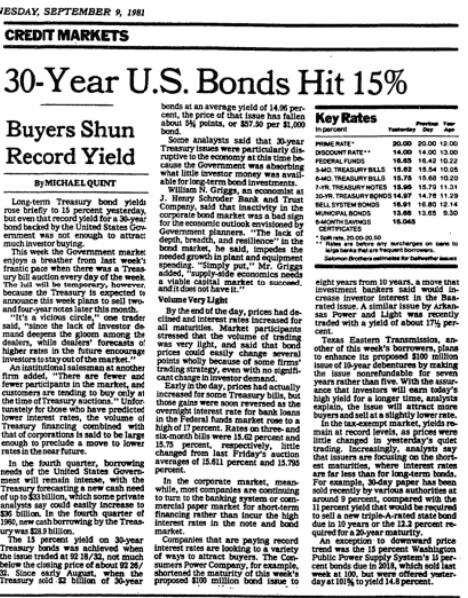
One million dollars invested at that time would have been paying out $150,000 a year in interest for 3 decades. Can you imagine how much demand there would be for bonds yielding 15% for that long today? The funny thing is when bond yields hit these levels in 1981 no one wanted to buy them.
Från tidningen:
Long-term Treasury bond yields rose briefly to 15 percent yesterday, but even that record yield for a 30-year bond backed by the United States Government was not enough to attract much investor buying.
”It’s a vicious circle,” one trader said, ”since the lack of investor demand deepens the gloom among the dealers, while dealers’ forecasts of higher rates in the future encourage investors to stay out of the market.”
samt
The bond yields of 2023 are minuscule compared to the 10-15% you could earn in the 1980s at times. But the nearly 5% you can now earn in Treasury bills that mature in less than a year’s time looks pretty darn good compared to the yields of the past 10-15 years.
Many market prognosticators are beginning to wonder if going from a world of 0% rates to a world with 5% yields will cause a massive shift in investor allocations from stocks to bonds.
It would surprise me if there weren’t a ton of investors who took advantage of this situation, especially retirees and those with short-to-intermediate-term saving needs.
For years the low interest rate environment was pushing people further and further out on the risk curve to earn anything approaching a respectable yield. For the first time in a long time, you can earn that respectable yield on relatively safe, short-term government bonds.
This is a good thing for savers.
But I’m not so sure investors en masse are going to all of the sudden put their entire portfolio into T-bills.
We as a species like risk. We like to gamble and take chances.
That’s why we go to casinos and bet on sports and play the lottery and invest in options, crypto, start-ups, individual stocks and a whole bunch of other stuff that comes with the risk of loss.

