Morningstar släpper varje år en uppdatering av sin “Mind the gap”-studie. Den visar vad den genomsnittlige investeraren får för resultat i sitt fondsparande vs vad fonden de sparar i får för avkastning. Teoretiskt - om man investerar i fonden 1 januari och håller den till 31 december - så kommer avkastningen vara samma, det vill säga att där inte finns något “gap”.
Eftersom studien alltid visar att det finns ett gap, så kan man dra slutsatsen att det är t.ex. beteendemässiga, tajmingrelaterade orsaker till den lägre avkastningen. Här är en sammanfattade artikel på ämnet. Hela studien kan man ladda ner här.
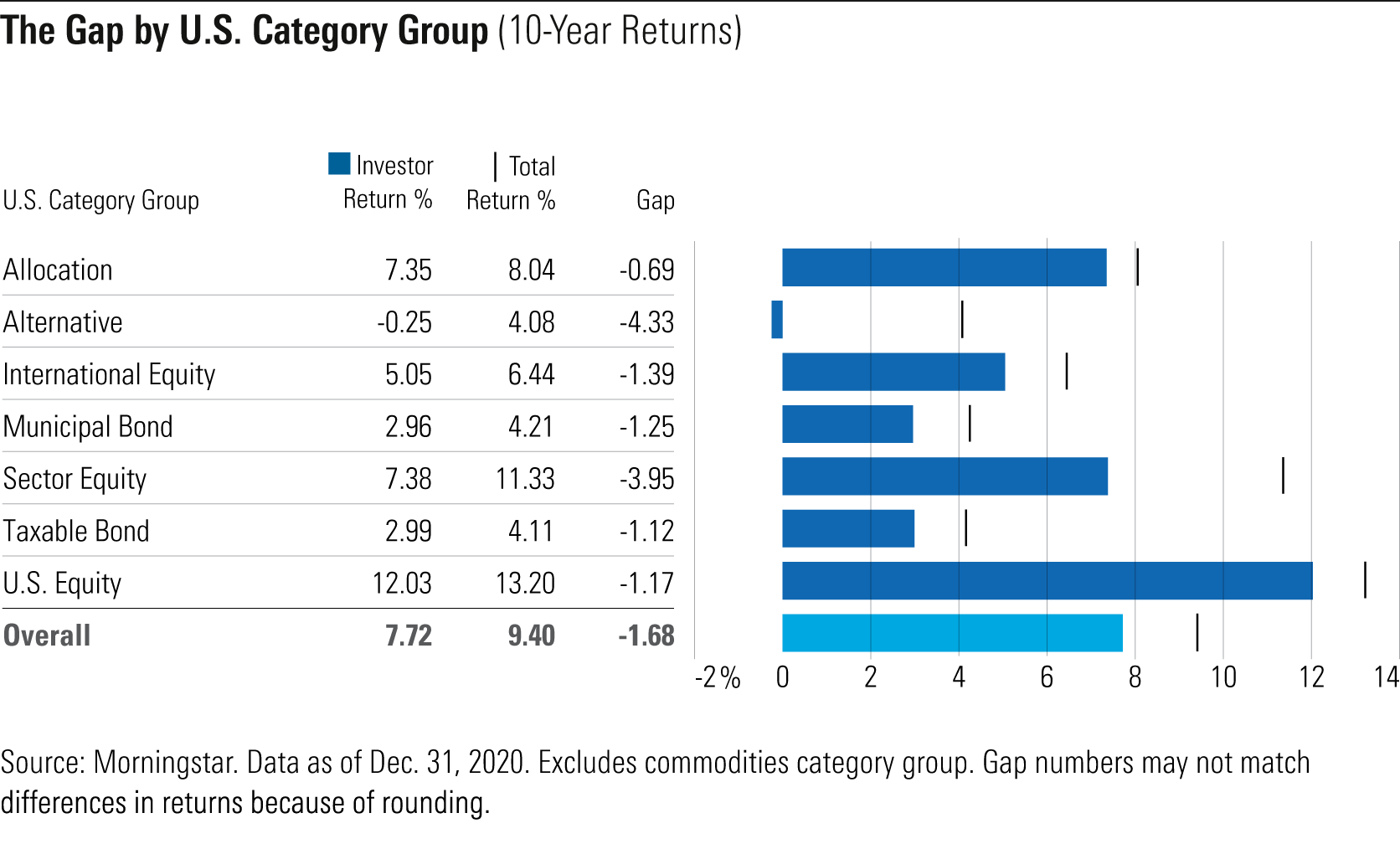
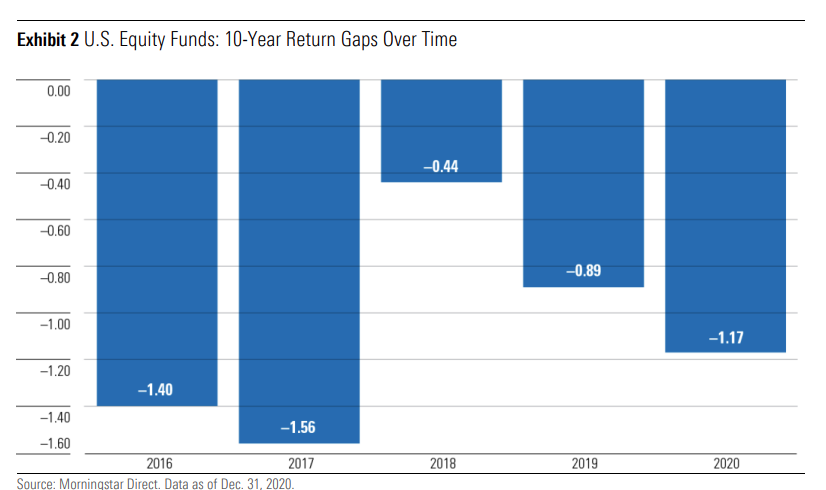
Från sammanfattningen:
Our annual study of dollar-weighted returns (also known as investor returns) finds investors earned about 7.7% per year on the average dollar they invested in mutual funds and ETFs over the 10 years ended Dec. 31, 2020. This is about 1.7 percentage points less than the total returns their fund investments generated over the same period. This shortfall, or gap, stems from inopportunely timed purchases and sales of fund shares, which cost investors nearly one sixth the return they would have earned if they had simply bought and held.
Sedan är det ju en del, inte så oväntade resultat såsom:
The more volatile a fund, the more trouble investors tended to have capturing its full return. For example, we found that the most volatile quintile of U.S. stock funds had an annual return gap of 1.7
percentage points over the 10 years ended Dec. 31, 2020, while the least-volatile quintile had a far smaller gap of 0.9 percentage points per year. This held for taxable bonds, too, where the most volatile quintile saw a 2.3 percentage-point return gap per year and the least-volatile quintile suffered a gap of only 0.6 percentage points.
De har även en “Learning from the results”
-
Focus on holding a small number of widely diversified funds
-
Automate mundane tasks, such as setting asset-allocation targets and periodically rebalancing.
-
Avoid narrow or highly volatile funds
-
Embrace techniques that put investment decisions on autopilot, such as dollar-cost averaging
Hmm… undrar om du har hört ovan på något annat ställe? 
Med följande sammanfattning:
Our study also shines more light on the merits of keeping things simple, favoring broadly diversified funds, and following a disciplined investment approach. While following a buy-and-hold approach will generally lead to the best results for investors who have enough assets available, dollar-cost averaging can be an excellent way to enforce investment discipline and avoid the perils of poorly timed cash flows.
Whether they invest a lump sum up front or follow a dollar-cost averaging system, investors who follow a consistent investment approach and avoid chasing performance will likely reap rewards over time.
