










































Min insikt: Jag är en vandrande 37-årig räntefond…
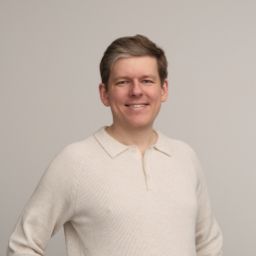
I dagens avsnitt intervjuar vi professor Paolo Sodini från Handelshögskolan i Stockholm om sparande, investeringar, vanliga misstag, ombalansering, bra fonder, faktorinvesteringar och helt enkelt vad forskningen visar fungerar. Han visar även hur man kan ta ett helhetsgrepp kring, till synes, olika delar i sitt liv och sin ekonomi och introducerar konceptet humankapital. En av de mest intressanta intervjuer jag har gjort. Någonsin.
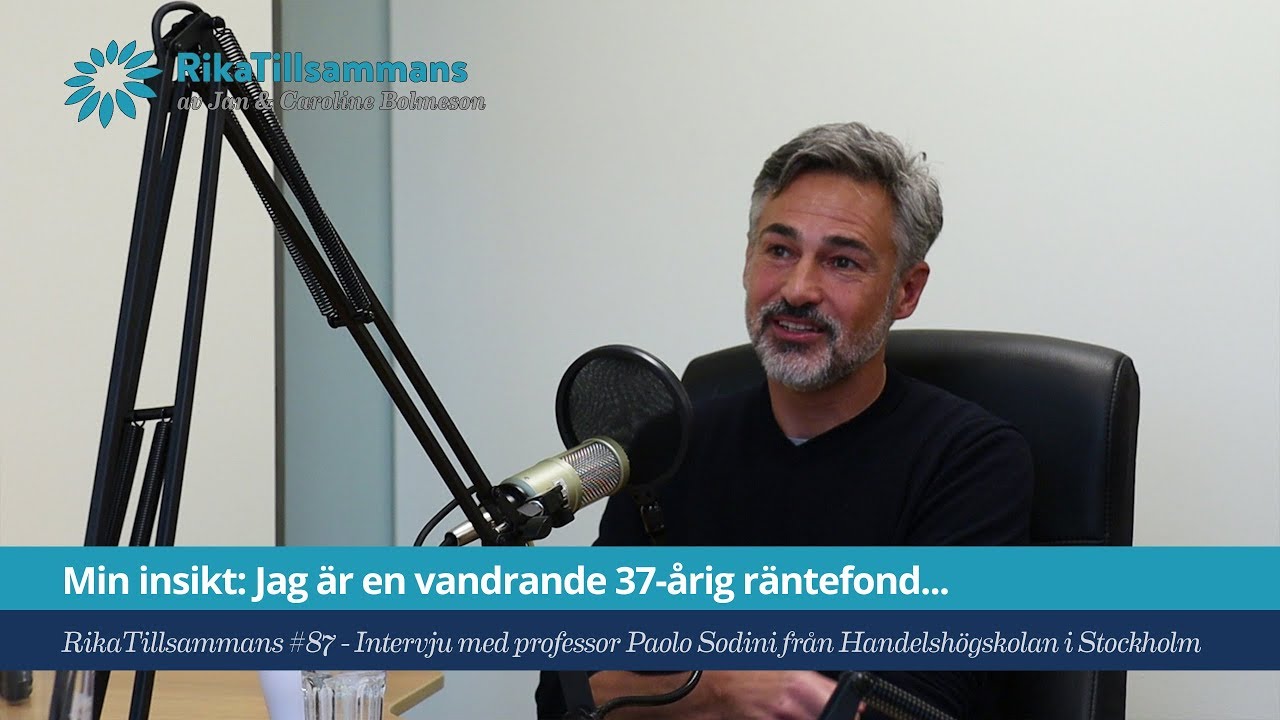
Avsnitt 87 | Publicerat 7 år sedan.
Avsnitt 87. Senast uppdaterad 3 månader sedan (2026-06-18) av Jan Bolmeson.
Denna video finns att se på Youtube eller via videon ovan. Du som är en RikaTillsammans-supporter kan se den utan reklam på Patreon.
Innehållsförteckning till videon
- 00:00:00 - Introduktion
- 00:01:00 - Paolo Sodinis bakgrund
- 00:04:18 - Hög utbildning förbättrar rationellt tänk
- 00:06:36 - Så investerar svenskarna
- 00:11:05 - Hur man ska ombalansera sin portfölj
- 00:14:27 - Det som kännetecknar en bra fond
- 00:15:35 - Problematik med fondförvaltare
- 00:20:43 - Svårt att skilja mellan tur och skicklighet
- 00:24:51 - Aktiv eller passiv
- 00:28:18 - CAPM och idiosynkratiska risker
- 00:33:33 - Factor investing och Smart Beta
- 00:38:13 - Investeringar med momentum
- 00:40:51 - Tips för ombalansering
- 00:42:20 - Definiera din risktålighet
- 00:45:49 - Om "humankapital"
- 00:50:53 - Din karriär som försäkring
- 00:55:10 - Olika strategier för olika åldrar
- 00:58:16 - Fler ålderspecifika investeringstips
- 01:02:30 - Ljusare framtid med mer utbildning
- 01:05:00 - Utformning av nya finansiella produkter
- 01:07:13 - Olika strukturer för huslån
- 01:11:22 - En sammanfattning
Du kan lyssna på detta avsnitt (87) där poddar finns, t.ex. på Spotify, Apple Podcast, Acast och Patreon. För innehållsförteckningen med tider, se fliken till vänster med längden på avsnittet.
Referens: Saknas.
Sammanfattning och guldkorn
Det viktigaste att veta. Swipa för att se fler.
Därför är avsnittet viktigt
Professor Paolo Sodini ger den akademiska grunden för investeringsstrategier vi pratat om i tio år. Han förklarar varför indexfonder fungerar, introducerar revolutionerande koncept som humankapital och visar hur forskning stödjer enkla men effektiva strategier för långsiktigt sparande.
Med Paolo Sodini
Professor vid Handelshögskolan i Stockholm med doktorsexamen från MIT och examen från London School of Economics. Grundare av European Network of Household Finance och expert på hushållsekonomi. Hans forskning på svensk data från förmögenhetsskatten har gett unika insikter i hur människor faktiskt beter sig finansiellt.
Du är en vandrande räntefond
En 25-åring med högskoleutbildning sitter på 9-11 miljoner kronor i humankapital - nuvärdet av framtida arbetsinkomster. Detta förändrar synen på risk dramatiskt. Med denna säkra "obligation" som grund kan unga ta betydligt högre risk i sitt sparande än traditionella tumregler säger.
15 års historik säger nästan ingenting
För att med 90% säkerhet veta att aktiepremien ligger mellan 3,5% och 4,5% skulle vi behöva 3000 års data. Även med 130 års historik är osäkerheten stor - aktiepremien kan vara allt mellan 4% och 8%. Detta gör det nästan omöjligt att avgöra om en fondförvaltare är skicklig eller bara har haft tur.
Svenskar mer rationella än väntat
Forskningen visar att svenskar som köper enskilda aktier ofta bara lägger små summor där, medan huvuddelen ligger i diversifierade fonder. De mer utbildade och erfarna investerarna tenderar att bete sig närmare det teoretiskt optimala - de diversifierar bättre och rebalanserar oftare.
Rebalansering - den dolda guldgruvan
Svenskar rebalanserar i genomsnitt hälften så mycket som de borde, vilket faktiskt är bättre än förväntat. Genom att återställa till din valda fördelning (t.ex. 60/40) köper du automatiskt när marknaden är låg och säljer när den är hög - utan att försöka tajma marknaden.
Varför indexfonder vinner
Systematisk risk (marknadsrisk) kan inte diversifieras bort och är det enda du får betalt för. Idiosynkratisk risk (företagsspecifik) får ingen kompensation. Aktiva förvaltare introducerar mest idiosynkratisk risk utan mervärde. Därför vinner billiga, marknadsviktade indexfonder över tid.
Tumregeln som inte stämmer före 50
Den klassiska regeln om lika mycket procent i räntefonder som din ålder är för defensiv för yngre. Sodini föreslår att hålla hög aktieandel (80-100%) hela vägen till 50-55 år, sedan gradvis minska till 40-60% aktier vid pension. Humankapitalet motiverar högre risk tidigt i livet.
Rörlig ränta skyddar mot inflation
Rörlig bolåneränta följer inflationen och din löneutveckling - du betalar alltid ungefär samma i reala termer. Fast ränta är istället en försäkring mot arbetslöshet. Valet beror på hur säkert ditt jobb är och hur mycket likviditet du har som buffert.
Kontrovers: Smart beta och faktorer
Vi förespråkar enkla globala indexfonder. Alternativ syn: Faktorinvesteringar som värde och momentum har historiskt gett överavkastning. Sodini menar att bevisen finns men implementeringsrisken är hög - handelskostnader kan äta upp fördelarna för privatpersoner.
Bostad som hävstång på humankapitalet
Vi kan låna 4-5 miljoner för bostadsköp men skulle aldrig låna samma summa för aktier. Skillnaden? Banken ser vårt humankapital som säkerhet. Bostad ger också en unik "hedge" - så länge du bor kvar spelar prisvariationer mindre roll för din ekonomi.
Vikten av utbildning som investering
Investering i humankapital genom utbildning är ofta den viktigaste finansiella investeringen vi gör. I ett samhälle med snabb teknisk utveckling blir kontinuerlig kompetensutveckling avgörande. Sveriges system med billig utbildning är en av våra största tillgångar.
Databristen efter 2007
När förmögenhetsskatten avskaffades 2007 försvann också datainsamlingen om svenskars ekonomi. Vi vet därför inte om hushållen är överbelånade eller om fastighetsmarknaden är övervärderad. Denna brist på mikrodata gör det svårt att reglera ekonomin effektivt.
Viktiga nyanser att komma ihåg
• Humankapitalets värde beror på bransch - offentliganställda har säkrare "obligation" än byggarbetare
• Rebalansering fungerar bäst årligen, inte oftare
• Även Sodini kan inte förutsäga marknaden
• Fast bolåneränta kan vara rätt vid osäker anställning
"Ju fortare man inser att man är medelmåttig, desto bättre. Desto mer pengar kommer man tjäna."
"En av mina största insikter är att ju snabbare du inser att du är genomsnittlig, desto mer pengar kommer du att tjäna."
"Jag ser mig själv som en vandrande räntefond"
"Det enda värdet för aktieförsättare är att få lyckotjänster att se bra ut"
"Varje års fördröjning kostar i snitt 400 000 kr i framtida förmögenhet"
"För 90% säkerhet skulle vi behöva 3 000 års historik"
"Varför ska jag välja en fondförvaltare som bara introducerar mer risk och väldigt lite extra värde?"
OBS! Eftersom intervjun är på engelska, glöm inte att slå på de svenska undertexterna via pratbubble-ikonen nere till höger. Sedan tabbade jag mig med ljudet ca 1h06min in i intervjun där ljudet är kass under ca 4 minuter. Sorry.
Transkribering av hela avsnittet
Nedan har vi transkriberat hela avsnittet för dig som hellre läser än tittar eller lyssnar. Den är gjord med AI så den är inte ordagrann, utan fokus har varit på läsbarhet.
Visa hela transkriberingen
Innehållsförteckning
Nedan följer en grov innehållsförteckning för transkriberingen.
- En vandrande räntefond
- Textat på YouTube, transkriberat på bloggen
- Idiosynkratisk risk och humankapital
- Sambandet mellan rörlig ränta och inflation
- Varför sammanfatta en intervju?
- Vad forskningen visar fungerar
- Historik säger ingenting om framtiden
- Humankapitalet som tillgång
- Tumregeln om räntefonder och ålder
- Intervjun börjar: varför household finance?
- The Hubble telescope of Swedish wealth data
- Rational theories had more bearing than expected
- Why people hold few stocks but still do okay
- Losses are limited, but you could do better
- Rebalancing: the second big mistake
- Who behaves more rationally?
- Who's on the other side of the trade?
- 3,000 years of data to be sure
- What we want to be promised
- Fama, French and the luck-versus-skill problem
- Why index funds are a hard concept to sell
- How much passive is too much?
- Bill Sharpe and the CAPM
- Oil companies and airlines: a brilliant explanation
- Sharpe shooting the game, and the CRSP database
- Does factor investing work?
- The factors: value, momentum, quality
- Explaining momentum
- A quick recap on rebalancing
- Standard of living and how much risk
- Human capital: the biggest asset early in life
- Human capital as a giant bond
- But that's exactly what we do with a house
- The wealth tax data ended in 2007
- A rule of thumb across phases of life
- Lever up early, then come down slowly
- Is the "age in safer assets" rule too moderate?
- Common mistakes and the cost of fees
- Investing in your human capital
- Why we can't always lever up to 100 %
- Variable rate hedges inflation, fixed rate hedges unemployment
- Financial markets as risk-sharing, not winning the lottery
- Tack och avslutning
En vandrande räntefond
Jan: Ett sätt att tänka skulle kunna vara att jag ser mig själv som en vandrande räntefond.
Jan: Ja, det är ett sätt att tänka. Du lyssnar på RikaTillsammans-podden som handlar om allt som är roligt med privatekonomi. I den här podden får du varje vecka ta del av konkreta tips, råd, verktyg och inspiration för att ta ditt sparande och din privatekonomi till nästa nivå på ett enkelt sätt. Vi som gör den här podden heter Jan och Caroline Bolmeson. Idag är det dags för avsnitt 87. Och idag är det ett lite speciellt avsnitt. Det är på engelska. Det är en intervju som jag gjorde för ett litet tag sedan med en professor från Handelshögskolan. Han kommer från Italien, han doktorerade på MIT, vilket för mig som är teknolog är bland de coolaste universiteten i världen, och han har examen från London School of Economics. Vi ska prata om allt det som vi har pratat om i tio år, fast från ett forsknings...
Caroline: Ja, från ett akademiskt perspektiv.
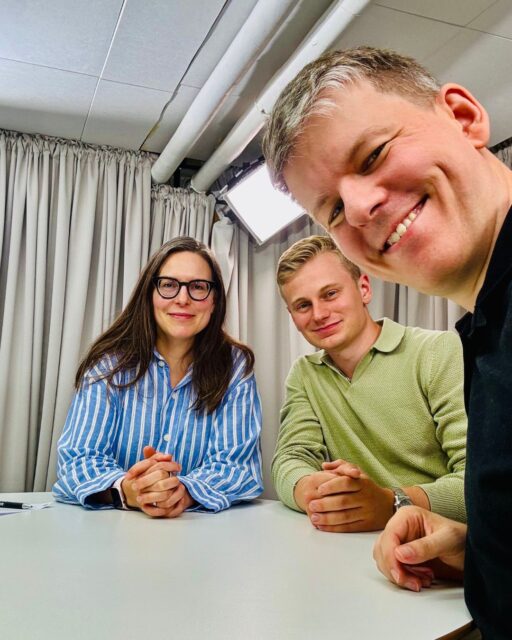
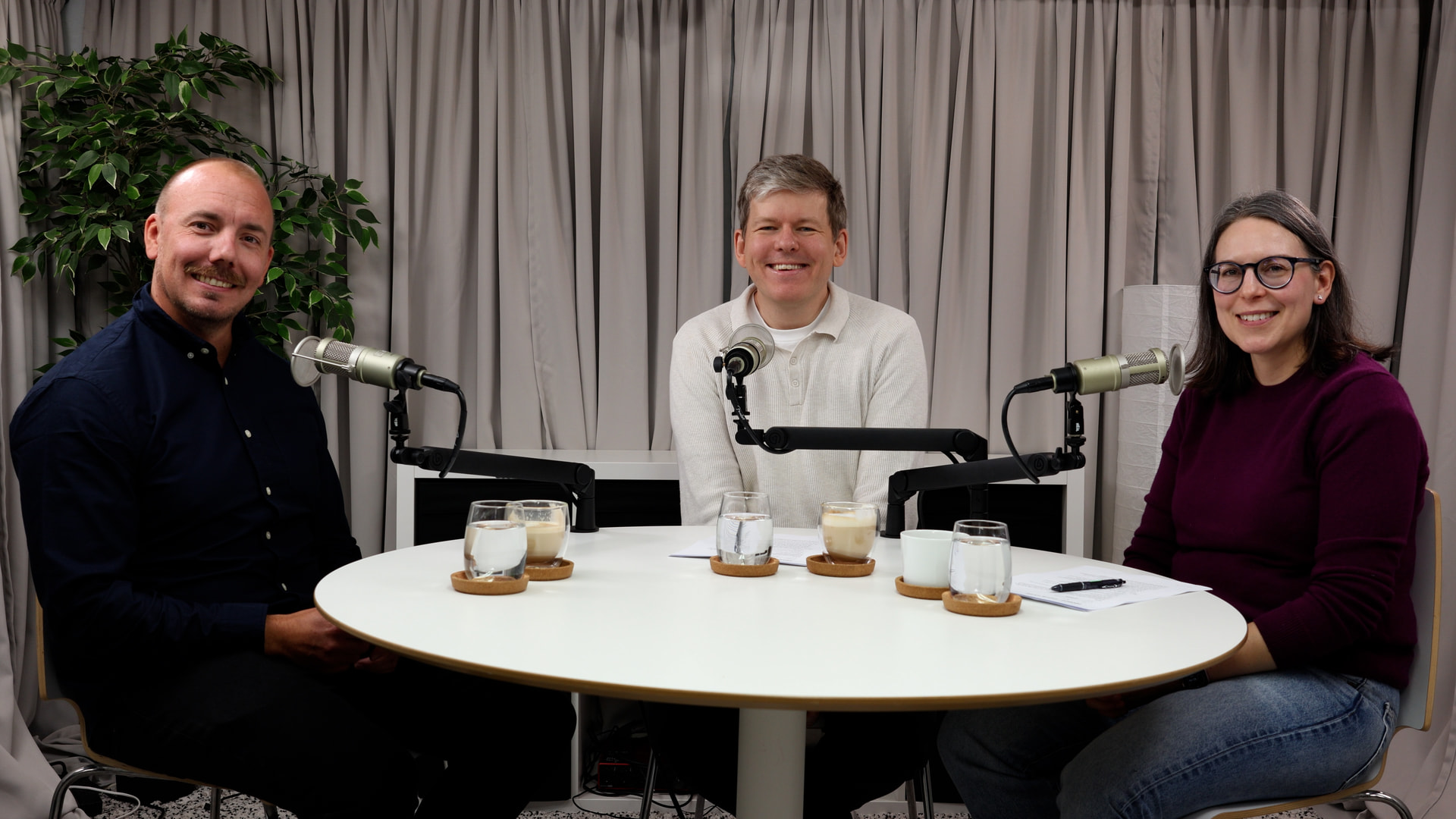
Jan: Precis. Jag tänker att vi gör precis som vanligt, att vi gör en kort introduktion av avsnittet, en sammanfattning av de viktiga punkterna, och sen gör vi intervjun som jag och Paolo gjorde. Du kunde tyvärr inte vara med i Stockholm.
Caroline: Men vi kan väl också säga det där, om man tycker att engelska är svårt. För han kommer ändå att prata lite akademiskt.
Jan: Ja. Men jag tyckte ändå att han var bra på att förklara med många exempel.
Caroline: Jo, absolut. Men jag tänker att då kan man ju titta på det här avsnittet på YouTube.
Textat på YouTube, transkriberat på bloggen
Jan: För där är det textat. Precis, på YouTube finns avsnittet textat. Och på bloggen finns en transkribering på svenska.
Caroline: Perfekt.
Jan: Och sen ber jag om ursäkt för min dåliga engelska, där Caroline påpekade först och såg att "gud vad du säger mycket like". Och jag bara, ja, för det är översättningen av "liksom" som jag säger väldigt mycket i de här avsnitten.
Caroline: Man tänker ju annars att det ska försvinna.
Jan: Ja, det gör det inte.
Caroline: När man skiftar språk.
Jan: Precis. Men jag tänker att vi hoppar rakt in i det. Så dagens avsnitt, vad vi kommer prata om i den här intervjun med Paolo: vi kommer prata om vad forskningen faktiskt visar fungerar. Vad är det för vanliga misstag som småsparare gör? Och vad kan man göra istället? Och sen tycker jag att bland det coolaste är att han kommer att introducera begreppet eller konceptet humankapital.
Caroline: Det blew you away.
Jan: Ja, det gjorde det verkligen.
Caroline: Det var något helt nytt som rockade din värld.
Jan: Ja, men efter tio år med privatekonomi tycker man ändå att man har stött på det mesta.
Caroline: De flesta teorier och de flesta begrepp, förhållningssätt på hur vi ska se på vår privatekonomi. Men det här var ändå något nytt.
Idiosynkratisk risk och humankapital
Jan: Det var nytt. Jag kommer ihåg att efter intervjun ringde jag helt inspirerad hem till dig. Bara "Caro, Caro!". Du var ute på promenad med en kompis. Vi får prata sen. Vi kommer prata om systematisk och idiosynkratisk risk.
Caroline: Och det kan också vara...
Jan: Det är överkursdelen i avsnittet. Och sen kommer vi prata om helheten i sin ekonomi. Att hela humankapitalet, sparandet, boendesituationen och så vidare bildar en helhet. Och det var egentligen det också som gjorde det väldigt coolt för mig, tyckte jag. Och sen är det ju mycket diskussion, det är en hel del käftsmällar, i alla fall till mig, där han sätter mig på pottan. Vilket också var ganska roligt. När man har en professor som sitter mitt emot en och ställer en fråga, då fick jag liksom tunghäfta och blev lite nervös. Men det gick ju bra, jag svarade inte helt fel. Och sen kommer vi också prata om hans jättefina resonemang kring risk genom livet. Hur man kan resonera där jag bara konstaterade efter den här intervjun att ja, jag har fel.
Caroline: Inte helt igenom fel, men att du kan justera din risk. För det är vår risk som vi har lite grann. Vi pratar om det innan du gör det.
Jan: Ja, precis. Och sen pratar vi mycket om hans jättefina resonemang kring rörlig ränta och fast ränta, till exempel på bolån. Och kopplar det till inflation.
Caroline: Det känns ändå viktigt för var och en som lyssnar på det här.
Jan: Ja, att lyssna på resonemanget.
Caroline: Just om man har lån eller tänker ta lån.
Sambandet mellan rörlig ränta och inflation
Jan: Precis. Och jag tyckte det var så himla coolt hur han kopplade ihop alltihop till en helhet. Jag har inte riktigt tänkt på sambandet mellan rörlig ränta och inflation och min löneutveckling. Men han bara slog ihop det och sa "ja, så kan man också tänka, om man är smart". Det var så himla coolt. Jag är fortfarande inspirerad. Och precis det här, överkursen som vi sa, systematisk och idiosynkratisk risk.
Och sen, precis som vanligt som vi har börjat göra nu i poddavsnitten, det här med villkor och ansvarsbegränsning. Det är viktigt att säga att det här inte är finansiell rådgivning som vi gör, utan en allmän information. Ska du fatta ekonomiska beslut, prata med en finansiell rådgivare. Vi rekommenderar ju de oberoende rådgivarna, där tumregeln är så här: betalar du i procent, så spring därifrån. Du ska betala per timme. Och mycket av det vi pratar om här är tolkningar, det är förenklingar. För Paolo var också lite orolig, alltså nu kommer vi göra det förenklat.
Caroline: Jo, men det är alltid så när man kommer direkt från forskningsfältet, man är akademiker. Man gör inte förenklingar för sina kollegor.
Jan: Nej, utan då ska det vara kantigt.
Caroline: Ja, det ska vara precis så som det är. Och ändå kan man inte...
Jan: ...vara säker på det man säger.
Caroline: Då är man en bra forskare.
Jan: Jag sa ju till honom att det är mer illustrerad vetenskap än det är Nature vi ska prata om. Han var lite orolig. Så jag vill verkligen säga att alla misstag är mina och tolkningarna är mina, och se studierna om du vill ha exakt vad som står. Så vi friskriver honom från grejen, tänker jag. Och vill man läsa mer om detta, så rikatillsammans.se snedstreck villkor. Bra, så nu kommer vår jurist vara jättenöjd.
Varför sammanfatta en intervju?
Jan: Så nu går vi vidare. Jag tänker att det här känns lite trist i det här avsnittet, att göra sammanfattningen, för det känns som att man snor några av poängerna som han kommer göra i avsnittet. Men jag tycker ändå det är viktigt.
Caroline: En sammanfattning, så att ta med dig det här kan vara bra att ta med sig.
Jan: Ja, och det här är de viktigaste punkterna. Och jag tror så här, det är som en abstract, så också de som bara lyssnar de första tio minuterna...
Caroline: Du svänger dig så med akademiska uttryck nu. Abstract är liksom en akademisk sammanfattning.
Jan: Av en stor studie man har gjort. Ja, precis. Det är typ det enda man läser.
Caroline: Nej, jag gillar ju att läsa hela.
Jan: Det var ett tag det enda jag läste.
Caroline: Men nu hoppar vi in.
Vad forskningen visar fungerar
Jan: Sammanfattningen och de viktiga punkterna i dagens avsnitt. Så om vi tittar på det, vad visar forskningen? Och jag måste säga, nu blev det ett sidospår. Jag var ju lite rädd för den här intervjun i förväg, för jag vet att akademiker kan vara lite torra. I min mörka stund funderade jag till och med på att avboka intervjun. Men du, tio minuter in i intervjun säger han allt det som vi har försökt säga i tio år. På ett elegant sätt. Och jag bara så här, yes, yes, yes. Det var fantastiskt.
Han pratar i avsnittet om billiga indexfonder. Vi pratar om vikten av att ha marknadsviktade portföljer. Det vill säga, väl spridda i hela världen, inte ha 50 % av portföljen i Sverige. För Sverige står för ungefär 1 % av det globala börsvärdet. Vi pratar om vikten av tillgångsfördelning, mellan räntefonder och aktiefonder i sin portfölj. Vi pratar om vikten av den årliga ombalanseringen. Vi pratar om att inte försöka förutsäga marknadens rörelser. Han drar det till och med så långt att han säger: varför ska jag välja en fondförvaltare som bara introducerar mer risk och väldigt lite extra värde?
Här kommer någon från akademin och säger exakt samma saker som jag har sagt och som vi har gjort.
Så allt det där, jag tror du kommer känna igen jättemycket. Och jag hoppas verkligen att du ser det som jag, det är ju inget nytt. Det går i linje med det vi gjorde i den förra veckans artikel kring de bästa fondrobotarna.
Caroline: Det kan vara ganska skönt, när man sätter sina pengar på spel.
Historik säger ingenting om framtiden
Jan: Ja, precis. Och han säger till och med att studierna visar att det är väldigt få fondförvaltare som bidrar med något värde. Och om man pratar om fondförvaltare, hur är då vår småsparare? Sen var det också rätt mycket där han satte mig på pottan, kring hur mycket historik man behöver och vad historiken säger.
Caroline: Historik?
Jan: Ja, till exempel, många pratar om att den här fonden har fem års historik. Och han säger så här, femton års historik säger ingenting, i princip. För framtiden? Ja. Och man kan inte ens urskilja bakåt i tiden, var det så att förvaltaren var skicklig eller hade han bara tur? Och sen pratar han så här, "du vet, jag har ändå varit ganska nöjd med att vi har historik från 1870". Där han bara säger "ja, jag vet, fast vill du säga någonting med 98 % säkerhet behöver du 3 000 års historik". Och jag var bara så här, va? Så att ja, men det var coolt.
Ju fortare man inser att man är medelmåttig, desto mer pengar tjänar man.
Humankapitalet som tillgång
Jan: Och sen också det här, just att ta hänsyn till hela ekonomin, humankapitalet. Det vill säga värdet av ens utbildning, värdet av ett jobb, värdet av ens färdigheter. Allt det som man kan, som kommer generera pengar under ens liv. Det behöver man ta hänsyn till när man tittar på sin totala ekonomi. Innan har jag pratat om att titta på din totala ekonomi, då har jag tänkt tillgångar, skulder, inkomster, utgifter, din pension. Medan han säger att du även måste ta in din karriär, dina färdigheter, din löneutveckling, alltså de mjuka värdena. Här gör jag den helt oakademiska definitionen, att vi kan se oss själva som vandrande räntefonder.
Caroline: Det gillar han.
Jan: Jag vet inte, han protesterade inte. Det var inte hans förslag, men jag gillade det. Jag sa plötsligt, jag är en 37-årig räntefond som vandrar omkring.
Caroline: Och du har en duration.
Jan: Precis. Och om jag är en 37-årig räntefond, så har jag ju 30 år till som jag är liksom låg risk, vilket betyder att för att ha en rimlig risk i helheten, ja, då måste jag ta mycket högre risk i mitt sparande för att kompensera för den här stora vandrande räntefonden. Det är därför vi kan belåna vårt boende och låna, till exempel sätta in en miljon och låna fyra miljoner för att köpa ett hus. Just för att man är den här vandrande räntefonden. Banken ser det så.
Tumregeln om räntefonder och ålder
Jan: Vi pratar mycket om det här upplägget som är jättebra med AP7 SÅFA. De har gjort det briljant, just med att de tar högre risk. Han ogillade min tumregel. Jag brukar ju ha en tumregel som är så här, att du ska ha lika många procent i räntefonder som du är år gammal i din totalekonomi. Och då var han så här...
Caroline: Ja, den känns kanske lite klumpig ändå på något vis.
Jan: Nej, alltså jag har tyckt att den var bra. Han var så här, ja, jag kan köpa den efter 50. Innan 50 är det för defensivt. Så är du innan 50 så måste du ta en högre, inte måste, men bör du ta en högre risk.
Han hade också det här med rörlig ränta. Han säger så här, rörlig ränta kan man se som ett skydd mot inflation. Vilket jag aldrig har tänkt.
Caroline: Vi kan kanske förklara det lite närmare.
Jan: Ja, jag tänkte precis säga det också. Och så säger han, fast ränta är ett skydd mot arbetslöshet. Inflation är ju det att pengarna minskar i värde för varje år.
Caroline: För varje år.
Jan: Och den rörliga räntan rör sig i takt med inflationen. Och en följd av detta för mig blir så här, men gud, om inflationen är 2 % och jag betalar 1,2 % i ränta för mitt lån, då betyder det de facto att om jag tar hänsyn till värdeminskningen på pengar, så blir det nästan som att jag inte betalar någonting för mitt lån. För att lånet minskar i värde.
Caroline: Men är det inte så att man ändå betalar något?
Jan: Jo, det är klart att du betalar pengar. Men om du tar hänsyn till värdeminskningen på pengar så sjunker värdet på lånet snabbt.
Caroline: Man märker ju inte det samtidigt. Jag fattar resonemanget. Jag bara tycker att man inte märker det.
Jan: Ja, men jag fattar det. Eftersom man inte märker det så har vi inte tagit upp det, och jag har inte heller tänkt på det. Så jag tyckte att det var skitkul. Så det här är några av huvudpunkterna att lyssna efter. Sen är det mycket, mycket mer roliga grejer. Så jag tänker att vi kör igång intervjun.
Intervjun börjar: varför household finance?
Jan: Det här är ett speciellt avsnitt om svenska hushålls finanser med professor Paolo Sodini från Stockholm School of Economics. Välkommen.
Paolo Sodini: Tack.
Jan: And you're also the director of the Swedish House of Finance National Data Center, as well as the founder of a European network of household finance. And I've seen that your research focuses on asset pricing, household finance, which was what caught my interest, actually. And you have published in several economic and finance journals. You have a PhD from MIT and a Master of Science in Econometrics from London School of Economics. And you have literally a CV spanning several pages, which I found. So very welcome. Do you want to add something to the presentation?
Paolo Sodini: No, I think it was pretty good.
Jan: So why did you choose the area of household finance?
Paolo Sodini: Finance came out actually a little bit by chance when I was studying at MIT. I started actually very interested in theoretical microeconomics. One of the theories that I really was fascinated by is general equilibrium. And then financial markets are one of the most interesting applications of general equilibrium theory.
Jan: Could you say something about that?
Paolo Sodini: It's a theory that studies the equilibrium across all markets at the same time. And financial markets are a simple example compared to other types of markets that we have in the economy, where you can apply general equilibrium theory. So I started to study finance, and then I wrote actually a paper for my thesis that studied how participation in financial markets would evolve as new financial products are introduced.
Jan: Okay.
The Hubble telescope of Swedish wealth data
Paolo Sodini: And this paper was a theoretical paper. And we were asked to find some empirical evidence for some of the findings that we had in the theory. And that's how I actually found the very unique and interesting data on wealth that you have here in Sweden, and that's how I got into household finance.
Jan: And from there on, actually...
Paolo Sodini: I stopped doing theory and I started to do more empirical work.
Jan: What was the most interesting thing, with the household finance or the wealth?
Paolo Sodini: I think at that time what was very interesting is that we didn't know so many things about household behavior or individual behavior in financial markets. And one of the issues was actually there wasn't good data about it. And instead in Sweden, because you used to have the wealth tax, you used to collect data on how people used financial products, mutual funds, stocks, how much they have in the bank account, how much risk they take in their portfolio and so on, coupled with information on people, demographics, income, schooling and so on. And so finally we could actually ask some of the questions on how people behave that you find in theoretical models, but we didn't know whether they corresponded to reality. And the Swedish dataset was very detailed and it was also very comprehensive. So actually, it's a little bit like I used to say for financial economics, it was almost like to put a Hubble telescope in orbit. So finally we could see things in details.
Jan: Okay, so we were the perfect example.
Paolo Sodini: Yeah, I mean, hopefully we are representative of the world population, because we are learning a lot from that data set actually. So that was the most fascinating thing for me, it's like finally being able to answer some of these questions.
Rational theories had more bearing than expected
Jan: So what did you find with this Hubble telescope?
Paolo Sodini: So many things actually. I think the most surprising thing for me was that the more rational theories of human behavior in financial markets were actually of a greater importance than I thought, which I think was very good.
Jan: Is it like with Daniel Kahneman?
Paolo Sodini: Yes, exactly. So for example, you can start to see whether the prospect theories, or those types of preferences that they talk about, actually have a little evidence in data, or whether it was other types of preferences or behavior that we see in microdata. So it was extremely interesting to see actually that more rational theories had more bearings than I thought. It doesn't mean that people are perfectly rational, far from it I would say. But they are still, I think, a good benchmark to think about people's behavior. One finding that came out of all this research that I've been doing in the last 15-20 years is that more sophisticated people, more educated people, richer people, people with more experience in financial markets, they tend to behave closer to the optimal behavior you have in rational theories.
Jan: Okay, because normally I've seen, I don't know if they're science-based studies, but you normally say that for instance engineers like I am, or doctors, they are mostly worse in stock investing because they have these behavioral biases. You need to be good in your job and be certain of things, but that doesn't really translate into success in the stock market.
Why people hold few stocks but still do okay
Paolo Sodini: Yes, okay, so it depends what you mean by success. So one thing that we have observed in one of the first studies we did is, it's true that people, and especially more educated people, tend to have individual stock holdings, direct stock holdings. But you also see that coupled with another behavior, which is that typically on the side they have a mutual fund and possibly a good mutual fund. And if they don't, it's not that they pour money into those two, three stocks that they have. So they represent not a huge fraction of their wealth. When it starts to represent a large fraction of their wealth, the money pours into mutual funds. The richest people in Sweden, those that hold almost 80 % of the stock market and represent only a third of the households that hold the Swedish stock market, they have on average 10 stocks. So it's only people that actually put little money in the stock market that hold one, two or three stocks. And then if you don't have that much money into it, it's not such a bad idea if this gives you some pleasure or happiness or whatever, as long as it's really not going to ruin you if those stocks are going to do badly.
Jan: So it's...
Paolo Sodini: That was one of the things. There is this kind of relationship between how much risk you take and how good is the portfolio where you put your money when you take risk, that we hadn't discovered. So what we find is that people who tend to choose a good portfolio put a lot of their money in it.
Jan: Okay.
Paolo Sodini: When it's a good portfolio. And it's typically the male investors who tend to pick a few stocks in the stock market that are not so good, so they don't put much money into it.
Jan: Ah, okay.
Paolo Sodini: Which means that from a wealth perspective, they are not going to probably get large hits.
Jan: It's mostly they do it for the wrong reason.
Paolo Sodini: Yeah, exactly, for fun. Now, this doesn't mean that it's a good idea, in the sense that perhaps if they would choose funds, or they would be aware that funds are such a better instrument to take financial risk, they would put much more money in the stock market, which in general is probably a good strategy, especially early in life. So in that sense, they are not taking as much risk as they should, as they could, if they only would have invested in better financial assets.
Losses are limited, but you could do better
Jan: Cool. Were there any other findings that surprised you?
Paolo Sodini: Another one. Well, first of all, there was this general idea that indeed people that are more sophisticated in terms of education and things like that, they indeed have better portfolios. And when they don't, they don't take that much risk. That was one of the things which actually meant that the losses, disregarding how much risk you should take, which is kind of difficult to assess since you can't observe people's attitudes towards risk. So this was the first surprising thing that kind of changed our view before. We just thought what you thought: people just hold one or two stocks, so they don't understand anything. Actually, they hold one or two stocks, but they understand what's going on. Of course, there are some people who lose a lot of money, but they tend to be a minority, I would say.
Jan: So in general, we do good things.
Paolo Sodini: I think you have a way to limit your losses.
Jan: Okay.
Paolo Sodini: You could do better.
Jan: Okay, yeah, that's good.
Paolo Sodini: As I said, maybe people take too much risk compared to how much they could take if they were choosing not two or three stocks, but a good mutual fund.
Rebalancing: the second big mistake
Paolo Sodini: So that's one problem. The other thing that was interesting is how many people rebalanced their portfolio. So as you know, one of the big mistakes people make is to try to guess whether the market is high or low. It's extremely difficult to do. I don't know anyone who is successful in doing it, and I have spoken with many smart people around the field. So we try to outsmart the rest of the market in deciding whether now it's good or not. And so the best strategy is, once you have decided how much risk you want to take, so you want to have a portfolio of 60-40 in stocks or in equity and safer assets, one of the best things you can do is to just rebalance your portfolio towards the 60-40 proportions. In this way, when the market is low, automatically you're going to buy and bring back your 60-40. When the market is high, you're going to sell. So you're going to, in a way, cash in your gains. But you do it automatically without trying to outsmart the market. People don't do that. People try not to rebalance.
The question that we didn't know is how much people do it. And what we found is that on average in Sweden, people rebalance about half of how much they should, which is not too bad. Because we might think that when the market goes down, people simply sell and escape, and when the market is high, people stay in. No, actually, there is some rebalancing. And then again, this rebalancing is more pronounced for people that have better education and are more sophisticated. Which brings us to the idea that when people do not behave optimally, perhaps it's a mistake, and we can actually convince them to become better if they had more education or sat with a financial advisor.
Who behaves more rationally?
Jan: If someone is listening to this, you talk about someone who is more sophisticated. How would you define that?
Paolo Sodini: Someone, for example, that is saving in private pensions, so he kind of understands what's going on. Someone that has some debt, so the idea being that he's in touch with the financial system through other ways. Someone who perhaps is wealthier or has high income. So all these characteristics that tend to signal more knowledge or more experience and more information.
Jan: Yeah. And you've touched the subject as well, like a good mutual fund. Because I love mutual funds. I started investing in stocks like in 96 and then I lost everything in 98, in the IT bubble. So after 20 years I went back to mutual funds. So I'm a big fan of mutual funds. But how would you define a good mutual fund?
Who's on the other side of the trade?
Paolo Sodini: So there is a basic fact that we need to understand, which is the other kind of big mistake people tend to do. People tend to outsmart the market in trying to understand whether it's time to sell or not overall. But also they try to outsmart the market in trying to pick the right stocks. Now, remember that every time you buy or sell something, there is someone else on the other side, that is actually accepting that trade. And remember that there is a lot of smart money out there, people with a lot of knowledge and very sophisticated tools to analyze financial markets, plus a lot of information about what's happening. So when I think about how to trade, I always think twice about who's on the other side. And 90 % of the time I decide that probably the other person knows more than me.
Jan: And then you're still, like you did your PhD at MIT, you went to London School of Economics and you're a professor at Handelshögskolan in Stockholm. That says something, I would say.
Paolo Sodini: So it's very difficult to pick these stocks. And so that's true not only for the average investor, but also for mutual fund managers. So on average, we have a lot of evidence that the average mutual fund manager is not going to be able to basically provide its clients with more performance after fees. And so then one should think, personally, I think in the following way: if I have to invest in a mutual fund, I'm already taking a lot of risk by investing in financial markets. Why should I add the risk of getting a bad manager? And who am I to understand who's a good manager, who's a bad manager? Unfortunately, it's extremely difficult to value performance. 15 years of good performance are actually, unfortunately, telling us very little about someone who's truly skilled. We can talk about that if you want. So this means that I like index funds. Very well diversified index funds.
If I have to invest in a mutual fund, I'm already taking a lot of risk by investing in financial markets. Why should I add the risk of getting a bad manager?
That means I want as low fees as possible. So I have two reasons not to have active fund management. I don't want the risk of a bad manager, and I don't want to pay for it, especially if there's a risk. So for me, a good mutual fund is a very well diversified global index fund that is very cheap.
3,000 years of data to be sure
Jan: You said that even 15 years of historical performance doesn't tell you so much.
Paolo Sodini: How much do you expect to get on the stock market, in terms of the equity premium?
Jan: The equity premium? I would say maybe 3 % annually.
Paolo Sodini: That's on the low side.
Jan: Okay.
Paolo Sodini: Some people would say it's more 6 %, some people would say it's more 4,5 %, 5 %.
Jan: I'd even be nervous when you ask me. I would say it's 3,5 % annually. And stocks 7 %, 8 %.
Paolo Sodini: Okay. So suppose it's about 4 %. How many years of data do I need to have to be 90 % confident that this 4 % is within 3,5 and 4,5?
Jan: No idea.
Paolo Sodini: 3,000 years.
Jan: 3,000 years?
Paolo Sodini: Yes. So there is so much volatility in the stock market. It's extremely difficult to pin down what this average is.
Jan: Okay.
Paolo Sodini: 100 years of data gives us a confidence interval, this span over which we kind of have an idea where this number is. There is about 2,5 % below and 2,5 % above. So that's why you don't know whether it's 4, it's 5, or it's 6. And that's why I don't know it either. That's, unfortunately, the truth. When you invest in financial markets, I mean, even with more than 100 years, I think we have 130 years of data or something like that.
Jan: Yeah, I think from 1870.
Paolo Sodini: Exactly, from the US, right?
Jan: Yes, in Sweden too.
Paolo Sodini: Yes, that's right. So we have a little bit of uncertainty about what the range of the famous equity premium is, which is how much stocks earn over bonds. And the range is something between 4 and 8 %, which of course makes a big difference for when you invest for your pension. So 20 years or 15 years of performance of a manager, how much does it tell me about whether this person is really good or not? I can see if I'm between minus 3 % and plus 10 %. He or she can be anywhere in between. And it's a bit of a fallacy, if you want. I would say it's a fault of both us and the bank industry.
What we want to be promised
Paolo Sodini: Obviously what we want, we want returns when we invest. And then when we go to a bank, we want to be promised that those returns are good. So if I were a new bank that comes in, you come to me and you say, "so Paolo, can you tell me please what I should really expect on the stock market?" And I say, "well, actually I have no clue, it can be anything between 4 and 8 %". Would you give me money? But that's the truth.
Jan: Yeah, that's good.
Paolo Sodini: So actually, you have more than bonds, and that's a big deal. And over a long period of time, thanks to the compounding of the interest, you're able to actually accumulate wealth for your pension.
Jan: Now, regarding the fund managers, I read a study, I think it was Barras 2010. They made like a 30-year study, I think 2,000 American mutual funds. And I think that they found that 74 % had the same result as the index. And 24 %, I think, had poor performance. And I think it was like 6 in 1,000, like 0,6 %, that had better performance than index. But then they wrote, I think, in the conclusion: but even for these 0,6 %, we cannot exclude just randomness or luck.
Fama, French and the luck-versus-skill problem
Paolo Sodini: There is a beautiful paper, if you want a more academic kind of source, there is a beautiful paper in the Journal of Finance by Fama and French, and Fama got a Nobel Prize recently, that actually does exactly that. And they try to understand to which extent it is luck and to which extent it is skill. And that's basically undistinguishable. So there are two problems. First of all, in every single year, as you say, the vast majority of active mutual fund managers do not beat the index after fees. Which in a way is what you would expect in equilibrium. Because if someone would beat the index by a large amount and for sure, what would this person do? Increase how much you pay for him or her until you are indifferent. So in a way we should expect something like that.
Jan: Yeah.
Paolo Sodini: That's a solution like the one with Richard Green. So first of all, it's a fact. But the second thing, the problem is that it's extremely difficult from one year to the other to predict which manager is the next year's. And so we have evidence that it's more luck than skill.
Jan: I saw a paper from Vanguard, which showed they made a study on the five-star rating at Morningstar. And they said there was no correlation at all. Like if a fund has five stars, it actually tends to go towards three stars in the next years. There was like no correlation at all.
Why index funds are a hard concept to sell
Paolo Sodini: I am not surprised. But I mean, at the same time, unfortunately it's a bit our fault. We feel safer when there is a manager behind our money, right? And the concept of index fund is a difficult concept. What is an index? What do you mean that you just follow an index? So it actually took a lot of research, and it takes quite a bit of sophistication, to understand that in financial markets, precisely because they are so efficient, precisely because the prices are set so well, it's difficult to spot something that is overvalued or undervalued. Which is the good news, and which means that mutual fund managers, they don't have much. But go and convince people that they shouldn't use a manager or an expert when they invest money.
Jan: I usually say that one of my biggest insights is that the faster you realize that you are average, the more money you will have.
Paolo Sodini: I completely agree.
Jan: One more thing about the index funds. I talked to a friend of mine who works in the financial markets, and he said that when Jack Bogle introduced index funds in the 70s or 80s in the US, the other fund managers put up whole-page ads in the New York Times, which said it's un-American to be average, or it's un-American to save in index funds. So it's difficult to start, because like you say, we want to have the best, we want to have the manager, but the evidence says that we cannot find that.
How much passive is too much?
Paolo Sodini: And that's in financial markets. The efficiency of financial markets actually allows us not to need that. Now, the thing is, it's not active fund managers. My feeling is that there is a lot of money out there waiting to be invested in a smart way. And the moment there is too much passive, I think active will show itself very quickly. And then immediately the money will be put in and the prices will be set right. And then the passive is going to be good again. And I personally believe that we are very far from it. Just to give you an idea, now, I don't know if this is the latest statistic, but I remember once reading on the OECD website that there are 50,000 listed stocks in the world. You know how many equity funds we have? 25,000.
Jan: Okay. Yeah. But I have seen some numbers as well that the number of indexes has also shot up.
Paolo Sodini: Yeah, sure. We have more and more indexes. So you think that there is no manager, but there is actually a manager who is executing this and making sure that the index is tracked very well. And to do that, and to set up indexes and set up funds, it takes more than a little skill. So you need a reputable company behind it. And I personally have a bias for world indexes, or a set of regional indexes that you combine together just to reduce the fees, because sometimes regional indexes are less expensive than the whole world index if you put them together. I think you don't need anything else. I'm always surprised by how many products we have out there. And I think it's a strange equilibrium between demand and supply that we have in retail banking. People have to understand the reason. That's the problem. And the reason is very sophisticated. It's this idea that prices are set right.
Bill Sharpe and the CAPM
Paolo Sodini: So the CAPM, I think, Bill Sharpe actually discovered, wrote the theory of the CAPM, which I think is one of the most interesting insights about how financial markets work.
Jan: Sorry, what is it?
Paolo Sodini: The CAPM is a way, it's one model, or I would say the foundation of many models, but I think it's the first one, where we try to explain the cross-section of expected return. So in other words, why certain stocks earn higher returns than others. And the insight of the CAPM is that some stocks earn more returns than others because they move more with the market. So in other words, they bear higher what we call systematic risk. One of the deepest concepts of Sharpe's theory is the distinction between systematic and idiosyncratic risk. Systematic risk is a risk that you can't get rid of, like deflation in our economy. We are all exposed to that. There is nothing we can do about it. You can't diversify it away. Idiosyncratic risk is the risk that is specific to an individual stock. By buying many stocks, you can diversify idiosyncratic risk away.
Jan: Sorry, is that what you normally talk about? You need to own 10 or 12 stocks to lower that?
Oil companies and airlines: a brilliant explanation
Paolo Sodini: I mean, one way to think about it is, suppose that you think the oil company is very good and then you buy some stocks of oil companies. Now, the oil price goes down, this oil company starts having problems. So you're exposed to the idiosyncratic risk of oil price shocks by buying oil companies. However, at the same time, you could buy airline companies. When the price of oil goes down, airline companies do very well because it's very cheap to fly their planes. So they behave in the opposite way of oil companies. So each individually, the oil companies and the airline companies, they have their idiosyncratic risk. It just happens that this idiosyncratic risk moves in the opposite direction. If you combine them together, you get rid of that idiosyncratic risk and you maintain the same return. So you reduce the risk but maintain the same expected return or a similar one.
Jan: Like a brilliant explanation.
Paolo Sodini: So that's the idea of diversification. You combine different stocks together to get rid of these idiosyncrasies that are all over financial markets, and then you're exposed to systematic risk. So what the CAPM said is that when you buy only oil stocks or only airline stocks, you're not going to be compensated for the additional idiosyncratic risk. You're only going to be compensated by how much they move together with the market. Hence you should simply buy the market. Hence index funds are good.
Sharpe shooting the game, and the CRSP database
Paolo Sodini: When he wrote down this theory, obviously he was shooting the game, because he just said: mutual fund managers pick stocks, they just add idiosyncratic risk to your portfolio, they tilt away from the market. Whenever you tilt away from the market, from the index, you take some idiosyncratic risk, because you become maybe more exposed to certain types of stocks rather than others. And he said for that idiosyncratic risk you're not going to be compensated, you're not going to get an extra return. This means that obviously he got a lot of outcry, and that's when the University of Chicago started to collect data on stock prices systematically. And the database is called CRSP, which is one of the most widely used data sets to understand financial markets. And then they showed that the CAPM works.
Jan: That the CAPM works.
Paolo Sodini: This was, by and large, very surprising, how well it worked. Then we discovered that it doesn't work very well. But because there is not only the market index that prices stocks, but also other factors. And that's where you have the Fama-French factors, momentum, all these other strategies. Hence, right now you hear about smart beta. Smart beta is nothing more than investing in factors that tend to explain the cross-section of stock returns. In other words, how much expected returns earn beyond the market. And that's how the CAPM has been a little bit revised.
Does factor investing work?
Jan: Does that work, with the factor investing? Because I've read a lot about it, but the conclusions are kind of diverse. I think Dimensional, for instance, is a fund company that has run that for years. I think Fama is...
Paolo Sodini: Fama and French are on the board, yeah. And there are a bunch of others out there. We have very solid evidence that factors earn an extra return beyond the index. There is a very long history of evidence where we find they have higher expected returns. Now, it could be that suddenly we have too much money invested in this strategy, so they start working less. I personally don't believe we are there. Value, in the last year, has been tried quite heavily. And it lost quite a bit of money. But it happened before that it had such a drawdown. So it could be just one of those episodes. Now, the big question is why smart beta works. That's where we don't, I mean, I think by and large it works. The question is why it works. And there actually we don't have, there's a big debate.
Jan: Okay.
Paolo Sodini: So some people think that, for example, value, or momentum, or other factors, quality for example, and things like that, they have higher returns because they also entail more risk. Which is that from time to time you are actually going to lose a lot of money. But that's part of the overall concept. You can't have higher return if you don't take more systematic risk. The other view is that instead these extra returns are coming from market imperfections or market frictions, by markets not being efficient. And either way, then you have to ask yourself why markets keep being inefficient. Why is this not corrected? So in that sense, when too much money is going to pour into these strategies, then these kinds of inefficiencies are going to be washed away. So we don't know that. But I think it's too early to say that these strategies are not working. We have a lot of evidence that they do, even though we don't have a very deep or conclusive understanding of why they work. There are two different points of view. They both could be right at the moment. There are two camps. I'm more on the rational one. I have some evidence more on the rational one, i.e. that there are compensations for risks rather than the behavioral, but the dice is out.
The factors: value, momentum, quality
Jan: And the factors you normally talk about is, I think, growth, value.
Paolo Sodini: So you invest in value. Value stocks, they earn a higher return than growth stocks.
Jan: Yeah.
Paolo Sodini: And in fact you can separate them between profitability, stocks with high profitability, and stocks with low investment.
Jan: Yeah.
Paolo Sodini: Okay. And then you have momentum. That's another big one. Some people talk about quality, which is more or less a combination of the others with some refinements. And what is interesting is that what we are finding nowadays is that these strategies do not seem to add additional systematic return only in the stock market. They actually tend to have this kind of features in other markets such as commodities or bonds and things like that. So it's a little bit like the tip of the iceberg of something underwater that is actually pervading across different markets, but we don't understand what it is yet.
Jan: Cool.
Paolo Sodini: It's a little bit going beyond CAPM. In the CAPM, the only factor was the market. We are finding there are others. We don't understand exactly where they're coming from, but it seems they're there across a lot of markets. And I think one exciting area of research is trying to see what's really under the water.
Explaining momentum
Jan: Interesting. It's also nice to hear that even through 2019 we're not done. There are still things to research.
Paolo Sodini: Yeah, definitely. Many.
Jan: Just a question about momentum. Could you explain momentum?
Paolo Sodini: So there is a lot of evidence that stocks that have been doing well recently, they tend to do well in the medium term. Now, I'm not an expert on this, but I think you take all stocks in the market, you take those that have been doing well in the last year, and then you hold them for something about six months or something like that. And then you sell them and you buy the new stocks that have done well, and so forth. I don't know, there are different versions of how you do this. It's not an easy strategy to implement. And so you need a lot of expertise and a very good trading platform to implement these strategies as well. So I would say personally, if there is one issue about smart beta, it's the implementation risk that you take by buying smart beta funds, which is very large. So what a good firm that uses a smart beta strategy provides is a good execution.
Jan: I read a book by Jeremy Siegel. He wrote about this type of investing. He said that you can show that you get a sufficient premium, but when you factor in the costs, you don't have an excess return.
Paolo Sodini: That's a big issue. It's very difficult. Definitely I would not advise anyone to do it at home. Because the trading costs that individual investors have are staggering compared to what a large hedge fund or a large financial institution can access.
A quick recap on rebalancing
Jan: Yeah. Cool. If we would just take a quick recap, rebalancing, what would be your advice?
Paolo Sodini: So decide how much risk you want to take. Which fraction of the portfolio you want to put in stocks versus safer assets, your bank account or bonds. And then over time, once per year, maybe twice per year, but I think once per year is enough, when you see deviations from this proportion, 60-40 or whatever you decided, then rebalance your portfolio towards that. In this way automatically you're going to buy when the market is cheap and you're going to sell when the market is expensive. So you're going to cash in on your gains, and over time this is the best way to earn the risk premium, the returns the market actually provides.
And so, when we think about it, one question is like how should I choose 60-40? So then I think there are two issues here. First of all, everyone, each of us is different. Some people want to take more risk, and people want to take less risk. And that's individual, you have to decide that a little bit for yourself, what you're comfortable with. One good way to think about it is, okay, how much liquidity needs do I have? So unexpected expenses, the car breaks, my child does something and I have to pay for it.
Jan: Things like that.
Paolo Sodini: All these kinds of, or like a problem with the house, things like that. So unexpected expenses. I want to make sure I'm safe on that.
Jan: Okay.
Standard of living and how much risk
Paolo Sodini: Or another one is standards of living. I have a large part of consumption every month, and I don't want to go below that. I have so many trips I want to take, I have a boat I want to maintain, and so on. I want to go to restaurants. So you do this calculation, following what is the standard of living, the level of consumption you would like to have. And then, how you invest your money.
Jan: And how much risk you want to take. What do you say about a rule of thumb?
Paolo Sodini: Okay, so I'll come to that. Just one second. So that's the first thing. Then you ask how much risk. Then individually you have to decide yourself on the rest of the money, how much you want to take risk or not. And then there are other things that are very important. If you are at the beginning of your working life, you have a lot of money you're going to cash in as you work until you retire. And by and large, especially if you have a very good education, that money is relatively safe. It depends on the sector where you are. But say you are a public employee, then I think the stream of money you're going to earn by working is relatively safe. In other sectors, you're less safe. As you progress in your career, you will understand what your skills are and how safe you are on the labor income you're going to receive.
Now, early in life, this labor income is a big asset you're sitting on, if you think about it. Because effectively this is money that is going to come into your bank account that you're going to be able to consume and save over time. So then early in life you can allow yourself to take a lot of risk on the little money that you have accumulated so far, because it's little compared to how much you're going to earn by working the rest of your life. As you get older then you have accumulated a lot more liquid wealth, but you have less to earn in the future, so you should be more careful how much risk you take on the wealth that you have accumulated, on the money that you have saved. So beyond your risk attitudes, I would say think a lot about how safe is your job and whether you're early or late in your career. Early, allow yourself to take a lot of risk in your saving. Later on, your savings are going to be a lot, you don't have that much more to pour in, so be more careful where you put your money.
Human capital: the biggest asset early in life
Jan: I must really say I love that reasoning, because it's the first time I've heard somebody take in, I think you call it human capital, in your papers. Because most people just isolate, like okay, how much money should I have in the bank account or how should I invest, and we don't consider the human capital.
Paolo Sodini: Human capital is, I think, probably one of the biggest assets we have early in our working career. So we have estimated it for Sweden, and I think that someone that has finished college around 25 years old is sitting on about 9 to 11 million kronor in human capital.
Jan: That's the present value.
Paolo Sodini: At 25, of how much he or she will earn throughout his or her working life, including...
Jan: ...how much he's going to get...
Paolo Sodini: ...from pension, which is effectively saved out of labor income. So human capital is one of the most important assets. People forget about it.
Jan: Or we take it for granted.
Paolo Sodini: We take it for granted. We don't think about how risky it is. But it's actually one of the main drivers of how we should invest the rest of the money, which is the liquid wealth, which is the part that we think about. And the reason why we don't think about human capital as being an asset is that it's intangible. Because you cannot trade it, since we don't have slavery, thank God. You cannot sell it, right? You cannot insure it, because otherwise people will stop working. Even though there is unemployment insurance in Sweden, in other countries, there is a way to kind of put a floor on the human capital you will have, no matter who you are. There are actually many institutions in our society that circle around this concept. Education, free education, how much you should invest in your skills, unemployment, all sorts of health insurance we can buy, and so on. And it's one of the biggest drivers of how you should invest your money over the life cycle, over your working life.
Human capital as a giant bond
Jan: If we would say something more about, as you said, it's the biggest driver. How can you elaborate on the drivers?
Paolo Sodini: The drivers are that, to the extent your human capital is safe, so you are a tenured employee, for example, or you have a good skill set, so you should have a stable stream of income over your working life, then your total wealth when you're young is this huge bond, a very safe asset that is going to slowly pay you over time, exactly like a bond. You sit on it, you earn interest. You sit on your human capital, you earn your labour income.
Jan: I see myself as a walking bond.
Paolo Sodini: That's one way to think. If it is safe, which means that on the little financial liquid asset we have on the side, you can give yourself permission to take a large risk. Would you be willing to borrow about 4,5 million kronor to invest about 6 million kronor in the stock market?
Jan: So I have 1,5 and I borrow 4,5. No, no. The answer is no. I don't think even I would be allowed by the banks.
But that's exactly what we do with a house
Paolo Sodini: But why do we do that when we buy a house?
Jan: Yeah. That's a great mystery.
Paolo Sodini: I would say there are two issues here. First of all, the reason why society allows us to do that is precisely because the bank is counting on it. And typically we do that when we are young, right? You buy your house in your 30s or even earlier, 35 or something like that. So the reason why we can do that, and the world is not exploding, is because we have all this human capital that is going to pay. And the bank knows it very well. And hence they know that we will be able to repay our debt and pay the interest on it.
Now, the investment in real estate, it's an interesting one. Because on the one side it's an asset that eventually you can sell. And it's a risky asset because prices change over time. They can have long periods that go up, they can have long periods that go down. The volatility is definitely not small. We have been in Sweden experiencing an incredible run.
Jan: 25 years.
Paolo Sodini: Exactly. We don't know how long it's going to last. Unfortunately, we don't know how stable that is, mostly because we don't have good data anymore. But it doesn't mean at the same time, it is an asset that on average entails quite a bit of risk. At the same time, you live in it. And you need to live somewhere. So it's a great hedge. If you think about it, once you buy an apartment or a home and you plan not to move, you don't care where the prices are going to go. You're still going to be there. And there are very few assets that give you this hedging opportunity. So for people that don't move, or who move to areas that have similar, correlated prices, as we say, this is a great investment. And you can borrow against it, it's one of the few things you can borrow against. Which makes a lot of sense early in your working life, precisely because you're sitting on this huge bond that you already have.
The wealth tax data ended in 2007
Jan: That's cool. I've been doing this for 10 years and I haven't thought of it in this way. So for me it's cool because it's basically what the bank does. It takes the security, this bond, like you and your career. You were also just saying, in a side sentence, that we don't know, because we don't have the data, you said, until 2007.
Paolo Sodini: So Sweden. As I told you before, I wrote a lot of research using Swedish data, which means that the good thing is that I know quite a bit about what's happening in this country when it comes to how people invest. And it was a fantastic resource to be able to study that. But in 2007, that data stopped being collected, because the government abolished the wealth tax, which we can talk about whether it was a good idea or not. But I don't want to dwell on it. At the same time, it also meant we stopped collecting. That's not true in other countries. For example, in Denmark, they stopped the tax, but they kept collecting.
So in the sense that they didn't have either enough human capital earnings or enough liquid assets to back, or even real assets to back, the amount of leverage they had. But after that, right now, we don't have the data anymore, so we actually don't know. So are we on the brink of a collapse, and the Swedish real estate market is completely overvalued and people are overlevered, and at some moment there could be a bang? Or are we in a relatively safe area where things are under control, where there is a low level of leverage in the assets of society? I don't think we know. And I think that's a big problem. Especially when we are at risk, both on the lending and on the asset side. Having microdata, so the information at a very detailed level of individuals, is crucial to regulate how our economies work. And they are not necessarily working well without regulation and without data. You're just guessing, which I think is a little bit what's going on.
A rule of thumb across phases of life
Jan: So if we would just go back, is there like a rule of thumb for how you can think in different phases of your life?
Paolo Sodini: Then you can be quite aggressive in your financial assets, provided that you have set aside enough money for contingencies. Unexpected expenses or the standard of living you would like to have. So enough liquidity. And so early in your life, I mean really, just go out there. A little bit like we do when we actually buy a home and we lever up. In that sense, I really like the way the premium pension system is organized, where they decided that you actually are over-levered, not over-levered, levered up to 130 %, I think.
Jan: 125, I think.
Paolo Sodini: 125 until you are 55 or something. I think it's a great thing.
Jan: Yeah. I normally say, like we said earlier, that's one of the best things we have in Sweden.
Paolo Sodini: Absolutely.
Jan: And I think you start there, you think you can do better, you start doing your own, and then you go back. Because you have a better day.
Lever up early, then come down slowly
Paolo Sodini: Yes, so of course you're a bit of a hedge fund. Because you lever up. And it costs almost nothing. I think it's 12 basis points or 15?
Jan: Yeah, I think it's 11.
Paolo Sodini: Okay, there you go. So it's a fantastic deal. Very well diversified and so on. In that sense, you should think twice early in life before buying a target-date fund. So a target-date fund is typically a 60-40 thing. Early in life that is too conservative. You have so many years to go before you arrive at your pension that the opposite is true. So I would say early, be aggressive, and then you can continue like that, I think, until easily 45, 50, and then you start lowering. You have accumulated so many financial assets that you cannot tolerate that much risk in that portfolio. And so you should start reducing it to a target when you retire, or about, I mean that depends on your risk aversion really, on your attitudes. But I would say it can be 60 % stocks, 40 % bonds, or 50-50 or something like that. Because remember, after you retire, you're not going to be disinvesting in one go. You still have another 25 years to go, so you have time to wait it out and keep reducing this proportion of investing in stocks.
Is the "age in safer assets" rule too moderate?
Jan: Yeah, cool. So you would, because like a general rule of thumb that people normally say when they don't know anything is that you should have as much in safer assets as you're years old. So if I'm 37 I should have like 30, 35 % in safer assets. Would you say it's too moderate, or should I even be more aggressive?
Paolo Sodini: Yes, I think you should be. I like that rule after 50.
Jan: Okay, so you do that. I mean it's like not even...
Paolo Sodini: Not even, actually. But you have to factor in whether you have a leveraged position in your real estate. Think about that as well. Because there you're taking a risk of being levered up, which means interest rate risk on your debt, on your mortgage. So you have to take that into account. And then you have to take into account how likely you are to stay in that particular place. So if you're likely to stay there, then it's actually a safe investment. The only risk you're taking is really the fact that you have to pay back your mortgage. So you have to factor it in into the unexpected expenses.
Jan: And here it's important...
Paolo Sodini: To remember that we are at a level of interest rates that are historically extremely low. So we shouldn't take for granted that it stays low like that going forward. But as I said, I would rather, it would be like a lot of risk all the way to 50, 55, and then you go down. So that when you are 65, you are 60-40. Or 50-50. Or 40-60. It's not going down from 25. You start at 80-20 and then it goes down. No, you hold it up.
Jan: For a long time.
Paolo Sodini: And then it goes down.
Jan: Okay.
Paolo Sodini: Because effectively, all the way to 50, you should even be levered if you want. And that's what we do when we buy real estate.
Jan: Yeah. Interesting. Oh, I love it.
Common mistakes and the cost of fees
Jan: Is there anything else that makes people, I mean, common mistakes?
Paolo Sodini: I mean, as I said, they try to outsmart the market, either by buying individual stocks, which I think, if you're having fun with it, please go ahead. Just don't put that much money, just have fun with it. But they have to be careful when they don't choose index funds. I think we should remember that 1 %, 1,5 % for a fund is an enormous amount of money. We could give back 30 % of our savings, compared to 15 basis points, 20 basis points, which is a factor of 10 times less. So the cost of the mutual fund is very, very important. Index funds are important. Rebalancing is important. So, any deviations from it. They're very simple rules in the end. For some reason we don't believe them. When we see the market going down, we panic. We don't buy. We don't rebalance. We get out. That's one of the biggest mistakes we can do. Because that's exactly when you're going to earn the risk premium.
Jan: Yeah.
Paolo Sodini: And then be conservative. I mean, make sure that the proportion of investing in stocks and bonds has a good rationale behind it. Think about your overall standard of living. Remember at the end of the day...
Jan: Yeah.
Paolo Sodini: ...the only thing you want is to have a good consumption, a good standard of living over your life. That's the goal. Not which fund to pick and which manager and so on and so forth. Just invest in index funds cheaply. Rebalance your portfolio. Take risk thinking about your profession and where you are in terms of your human capital and how much wealth you have accumulated. Think about whether you're going to move or not if you have real estate. Think about whether you have a lot of mortgage and the interest rate risk you have. And that's it, I would say.
Investing in your human capital
Jan: Is there a way to invest in your human capital?
Paolo Sodini: I think this is the biggest and most important investment we do. Financially also. And I think it's very, very important. And as a professor, I think we have a lot of responsibility, I have, and my colleagues have, a lot of responsibility for providing a good education system. The fact that even later in life you can retrain yourself and do that cheaply, without having to pay a lot of money. I think we are entering a society where we will constantly have to be retrained, because the skills that are needed are going to change a lot over time. There are these technological revolutions that have wiped out a lot of professions. We should take that into account and be ready to recycle, if you want, or retrain ourselves over time. So a cheap, good education system provided by our society is probably one of the most important assets a country can offer its own.
Jan: Yes, yes. So we should be grateful that we live in Sweden.
Paolo Sodini: Yes, it is.
Jan: I think when I talk to people, they're like, okay, I have my house here, or my home, and then I have my investments here, and then I have my career here. But what you did for me today is to see, okay, they're not three separate parts, but you need to see them all together.
Paolo Sodini: Absolutely.
Jan: And the one affects the other. And you can take a lot more risk. Because I find that a lot of people are too defensive, because we use this, okay, 37 %.
Paolo Sodini: I think you should be there and then you go down.
Jan: Yeah.
Why we can't always lever up to 100 %
Paolo Sodini: So it should be like this if you are able to lever. When you lever, then you go to 300 and then you go down like that. But we can't, unless we buy a home. Then you're there and you go down. But then you can go 100 %, that's not full. I have a simulator that I can show. It's so hard to send. When you consider human capital, you cannot be at 100 % like we do in PPM, all the way to 50.
Jan: Is there anything in particular about the structure?
Paolo Sodini: Yes, there are a few things. First of all, variable rates are the better hedge against inflation, right?
Jan: Okay.
Paolo Sodini: Because you don't want to be stuck on a fixed rate and then inflation goes down and you keep paying 6 %. It happened, right?
Jan: In the 90s.
Variable rate hedges inflation, fixed rate hedges unemployment
Paolo Sodini: People were borrowing at 9 % and then inflation went down to 2 % and they were stuck with an interest rate at 10 %, right? If you have a variable rate, you're going to follow inflation. Your salary is going to follow inflation. So you're fully hedged against inflation. In a way you always pay the same in real terms. Because the salary...
Jan: Yeah.
Paolo Sodini: But you face these fluctuations. Which means if you suddenly lose your job, then it's very risky. Whereas a fixed rate, you have kind of fixed it. You know how much it's going to be.
Jan: I see that kind of as an insurance, when you fix the rates.
Paolo Sodini: Yes. But insurance with respect to what? Not with respect to inflation. It's insurance with respect to your unemployment.
Jan: Exactly.
Paolo Sodini: Yes.
Jan: Yeah.
Paolo Sodini: But the variable rate is good insurance with respect to inflation. So it's a tradeoff. So you have to ask yourself. To be a little bit exaggerated: if I have a lot of money, can I get out of my mortgage if the rate goes to 7-8 %? And still be on the safe side of the month? Then I think it's fine. But if I'm not, then I have to think about at least fixing it, so that I can feel comfortable. Especially now when there is the option. But on the other side, go figure it out. I mean, Japan has had low interest rates for 25 years. So we could be on this for 30 years. We don't know. And personally, I also think there is a lot of learning in the housing sector.
Financial markets as risk-sharing, not winning the lottery
Paolo Sodini: I think it's important. You have both goals. I think much is that our economies do create growth and welfare, and investing in the stock market should not be seen as a way to win the lottery, because it doesn't work. You could be lucky, of course, but it's just luck. It should be seen as a way to share, or contribute and be part of the growth that our economies are able to produce. I mean, financial markets, you asked me about what I liked a lot, about why I got interested in it. And I like general equilibrium theory. Financial markets is one of the institutions that our society has devised to distribute and share risk in the most efficient way. So remember, when you invest in financial markets, you're not trying to make a lot.
When you invest in financial markets, you're contributing to the risk-bearing that other people carry. It's risk-sharing, not winning.
I think you will earn a return, but in the market, because you're contributing to bearing the risk that other people have. And they should give you a part of that return. They're better off taking part of that return off you. And in order to do that, they have to compensate you. And that's why you earn a high return. But that's how we have to think about financial markets. It's risk-sharing, not winning.
Tack och avslutning
Jan: Amazing. This is going to be one of my favorite episodes. When people are going to say, like, what episode should I listen to? I would say this one. So I just want to say a big thank you, Paolo, for sharing all your knowledge. And I think it's a good thing even when I learn something, which I really, really did. So thank you very much. And I hope that you want to join us for another episode in the future.
Paolo Sodini: Sure. Thank you very much.
Jan: Thank you.
Vanliga frågor
Hittar du inte din fråga ovan? Se alla frågor här, eller ställ den i forumet.
Communityns kommentarer
Var först med att skriva en kommentar, en fundering eller en fråga i forumet. Vi ses där! 🙂
Relaterade sidor och annat kul

Stöd RikaTillsammans
RikaTillsammans finns tack vare dig – vi ägs inte av någon bank, tar inte emot presstöd, säljer inte rådgivning och vill inte förvalta dina pengar. Det gör oss fria, men också helt beroende av dig och vår community.
Om du gillar det vi gör får du gärna supporta oss – genom att bli månadssupporter, swisha ett valfritt belopp eller bjuda oss på en digital kaffe.
Som tack får du tillgång till extramaterial, bonusavsnitt, verktyg och inbjudningar. Tillsammans blir vi både klokare och rikare. Läs mer.
Tack för att du hejar på oss!

Från 49 kr/månad
Eller stöd oss via...
Swish (123 463 53 22) BuyMeACoffeeTillsammans blir vi både klokare och rikare dag för dag. Tack på förhand!
Senaste nytt på RikaTillsammans
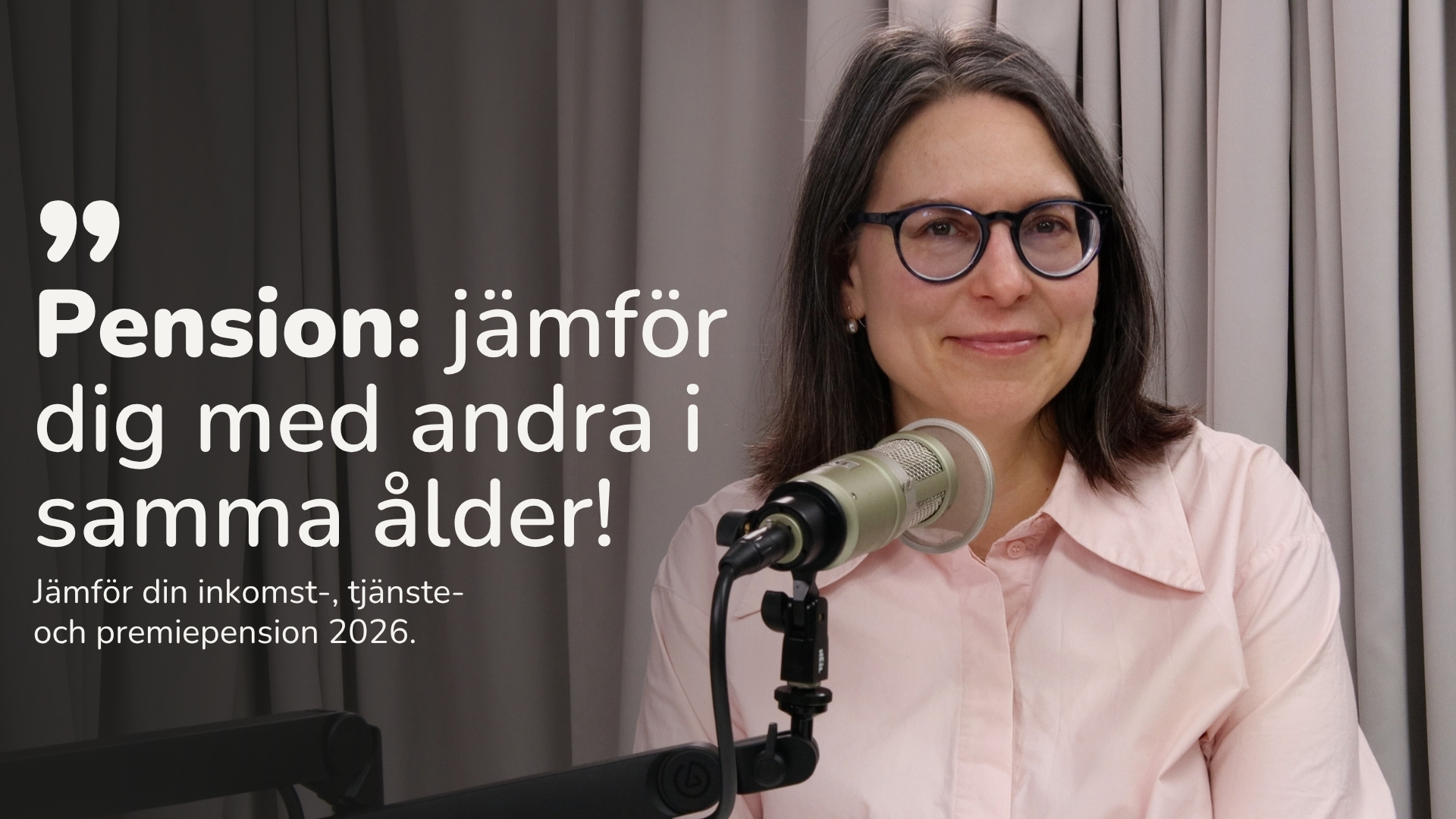

Hur stor pension har svensken 2026?
Vi dyker ner i snitt-svenskens inkomstpension, tjänstepension och premiepension och jämför med Pensionsmyndighetens typfall så att du kan ge dig själv en klapp på axeln.
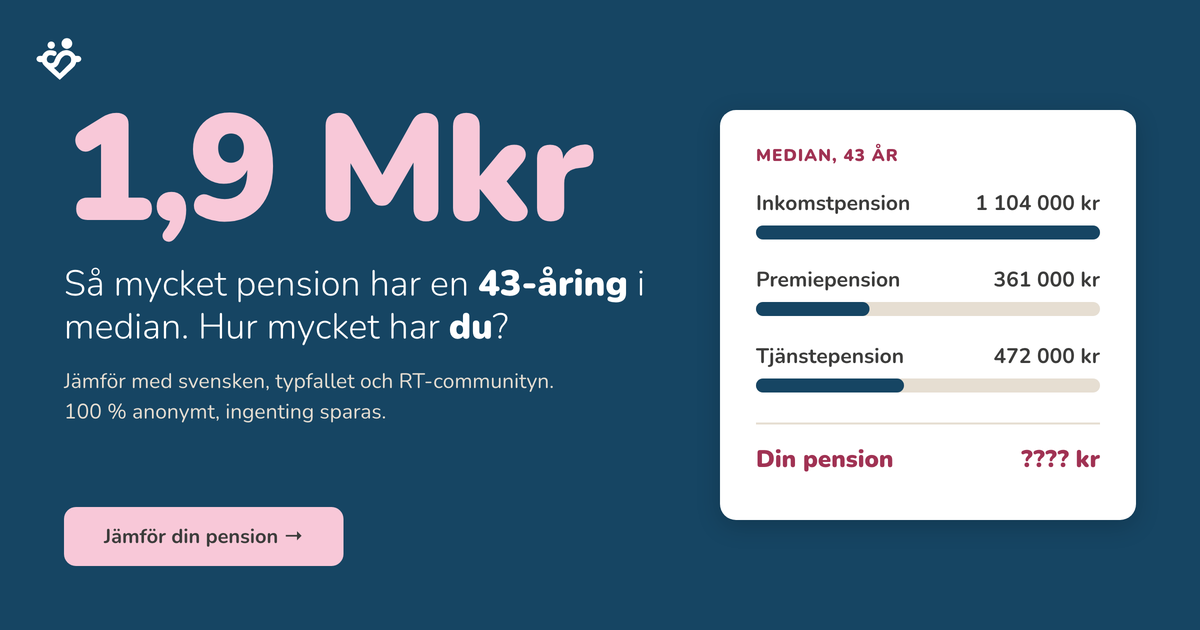
Jämför din pension med andra i din ålder
Se hur din egen inkomstpension, premiepension och tjänstepension står sig mot Svensson, communityn och Pensionsmyndighetens typfall 2026. .
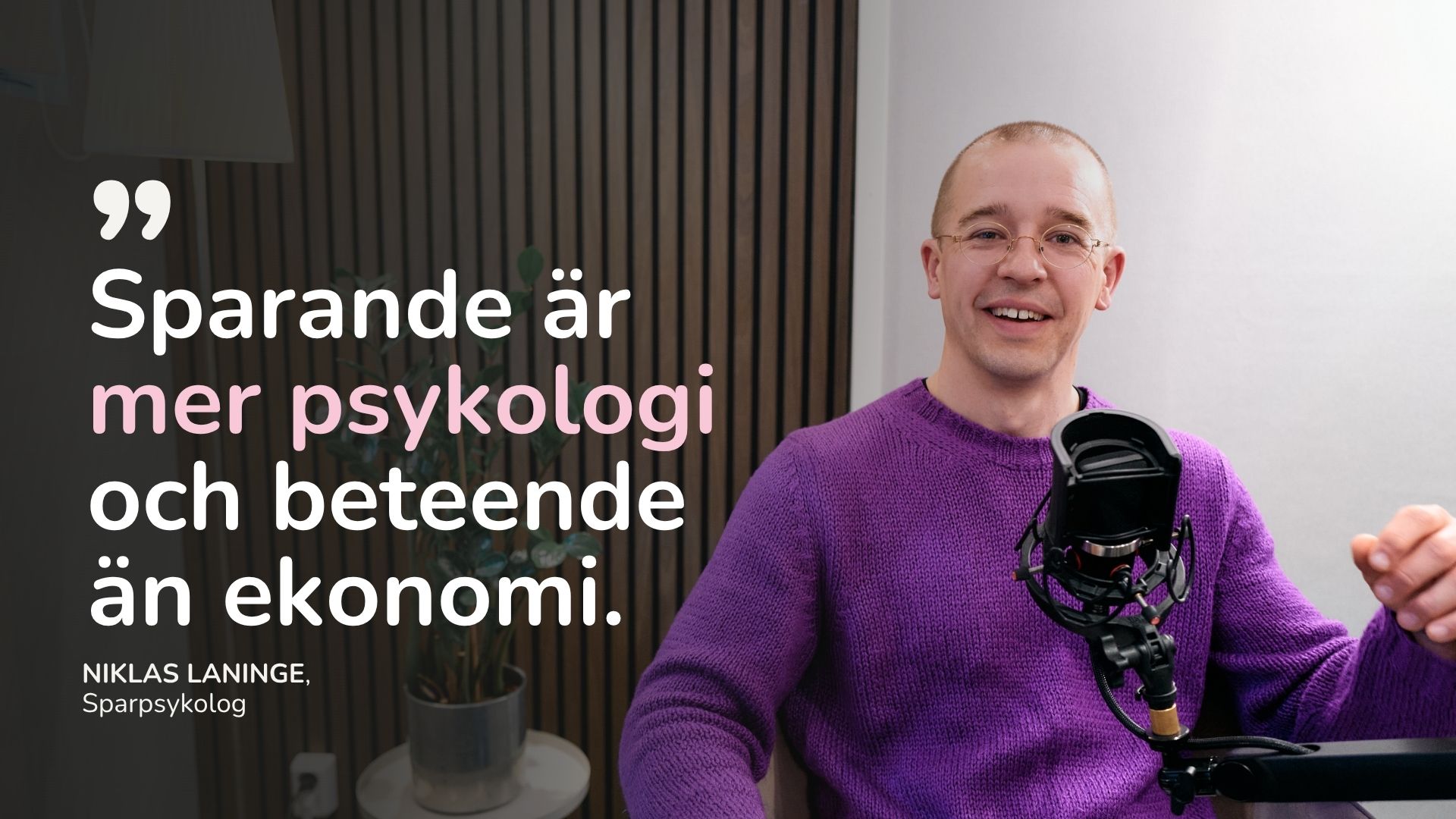
Sparande handlar mer om psykologi än ekonomi
Niklas Laninge, sparpsykolog på Opti, om varför hjärnan är dyrare än fondavgiften och att han vill att svenskarna ska bli ett bra spenderande folk.


FIRE via tjänstepension: så slutade Johan jobba vid 55
Det finns fler vägar till ett rikt liv. Följ med Johan från pionjär inom svensk e-handel och konkurs i finanskrisen till friheten att välja själv i dag.
Tips för att anlita hantverkare och renovera (ekonomiskt) rätt
Vad kostar en hantverkare och när ska man göra jobbet själv? Christopher Bolin, från Comfy Living, guidar genom pris, avtal och vanliga misstag så att du blir en bättre beställare.